Cocaine sharks: Why Are Sharks In the bahamas high on cocaine and other drugs ?
- cocainedelivery

- May 10
- 3 min read
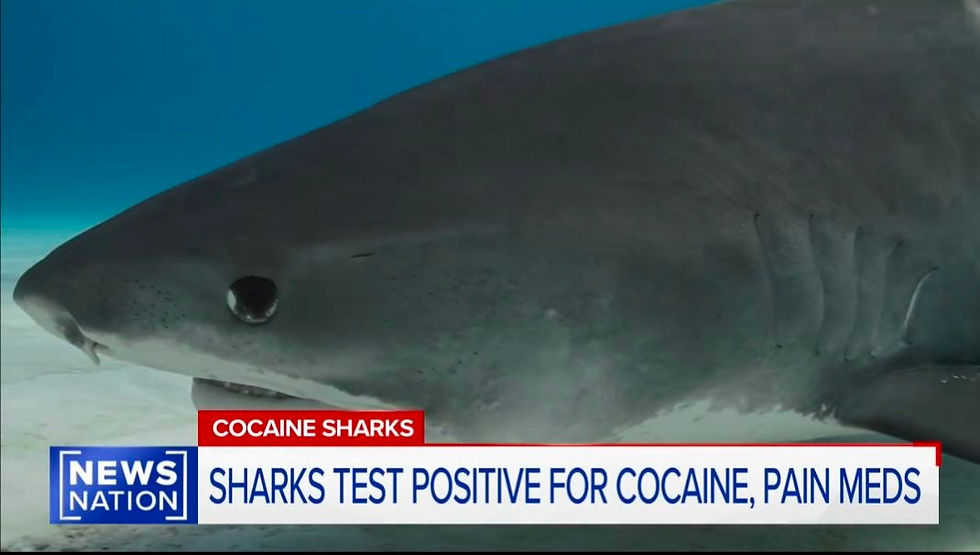
Listen up, land-dwellers. You thought your weekend was wild? Try being a shark high on Cocaine and Other Drugs in the Bahamas right now.
Researchers have released a study that resembles the storyline of a particular Netflix documentary (which, incidentally, already exists). It appears that sharks near Eleuthera Island are testing positive for cocaine, caffeine, and painkillers. In essence, these top ocean predators are starting their week as if they've just returned from a three-day music festival.
The Tea (Or Should We Say, The Coke?)
Scientists at Brazil's Federal University of Paraná captured 85 sharks from five distinct species, collected small blood samples, and released them back. The findings? Approximately one-third of these sharks had traceable amounts of drugs in their systems. This includes Caribbean reef sharks, nurse sharks, and lemon sharks, all seemingly indulging more than a Wall Street broker in 1986.
The drug cocktail included:
Cocaine (the headline stealer)
Caffeine (because even sharks need their morning fix)
Diclofenac and acetaminophen (painkillers, presumably for the hangover)
But How Did They Obtain Cocaine ?
This is where it becomes less amusing and more of a call for "humans, take responsibility." It's not about sharks using sea turtles for illicit activities. These drugs reach the ocean via human wastewater. Everything we flush, discard, or excrete ultimately ends up in marine environments. The Bahamas, as a popular tropical tourist destination, experiences significant human activity—and evidently, a considerable amount of human... waste.
Lead researcher Natascha Wosnick (who has essentially become the foremost authority on sharks that indulge excessively) notes that while the focus is often on the detection of cocaine, the prevalent presence of caffeine and common pharmaceuticals is just as alarming. Your regular Starbucks routine? It’s affecting the sharks as well.
Are Sharks in The Bahamas Now Attacking Humans?
Relax, Jaws fans. The scientists aren't concerned about sharks on cocaine-fueled rampages. Their worry lies in the long-term health effects on shark populations. These substances have no natural counterpart in the ocean, and prolonged exposure could disrupt shark biology in ways that remain unclear to us.
Admittedly, a shark fueled by both caffeine and cocaine is likely to swim in circles at 3 AM, rearranging its whole reef.
The Plot Thickens
This isn't even Wosnick's first rodeo. In 2024, she found cocaine in sharks near Rio de Janeiro, Brazil. Because if there's one thing those cities have in common, it's a reputation for knowing how to party. The difference? The Brazil study tested liver and muscle tissue (long-term storage), while the Bahamas study tested blood—meaning these sharks had been exposed recently .
There's also the 2023 documentary Cocaine Sharks , where scientists in the Florida Keys tested how sharks reacted to stimulants similar to cocaine. Spoiler: they were interested. Very interested. Like, "maybe skip the chum and bring the Colombian powder" interested.
The Bottom Line
So next time you're in the Bahamas and see a shark swimming erratically, talking way too fast about its new business idea, or grinding its teeth against a coral reef... maybe cut it some slack. It's not having a midlife crisis. It's just living in the same water we keep flushing our good times into.
The ocean isn't a trash can, folks. Not for plastic, not for pills, and definitely not for your leftover party favors. These sharks didn't ask to be part of the weekend warrior lifestyle. They just want to swim, eat fish, and not test positive for substances at their annual shark physical.
Stay wet, stay wild, and maybe think twice before you flush.
Sources: Smithsonian Magazine, Environmental Pollution journal, CBS News


Comments